No products added!

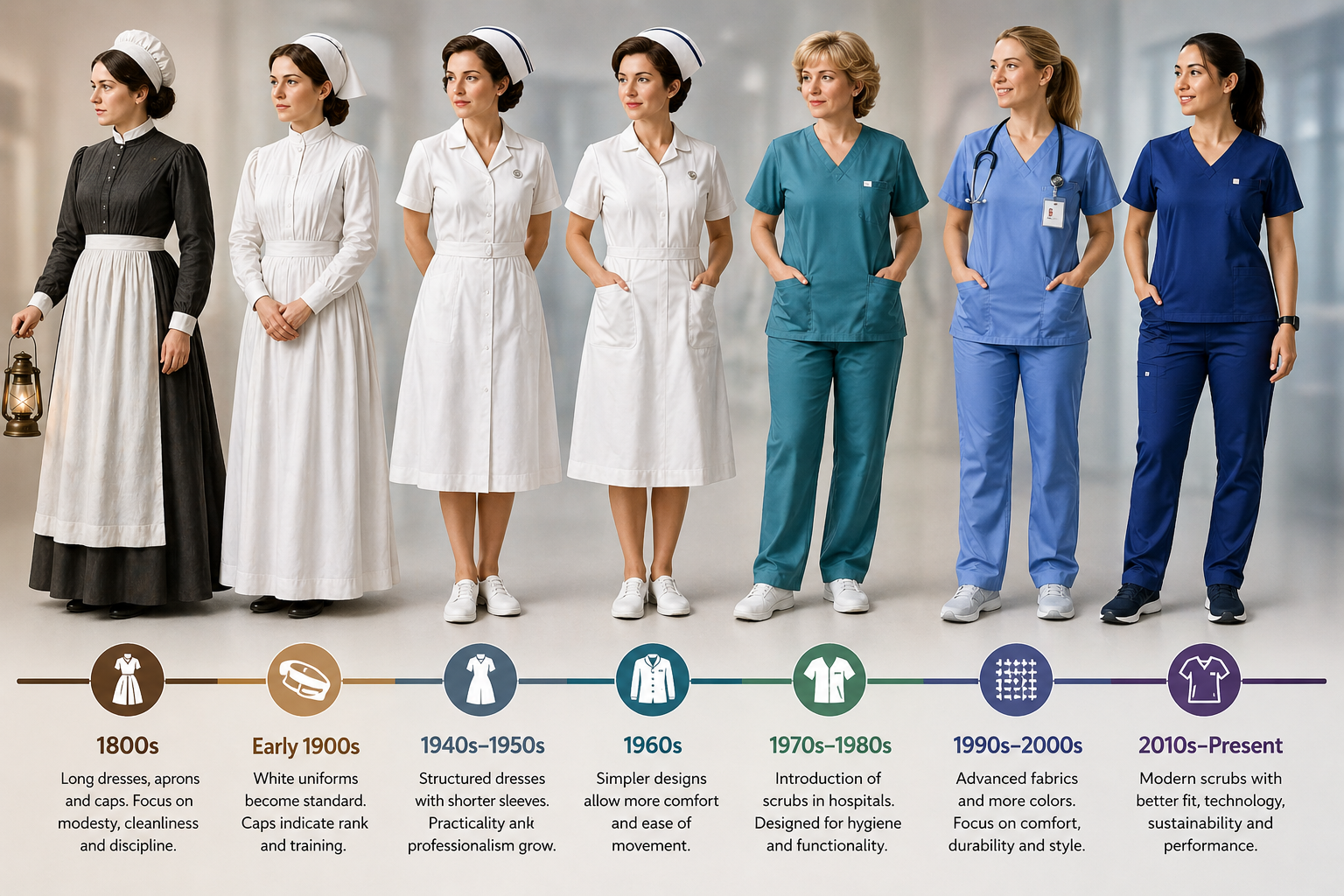
Nursing uniforms have changed significantly over the past two centuries. Their transformation reflects changes in healthcare practices, workplace safety standards, and the daily needs of medical professionals. What began as modest clothing designed for cleanliness and discipline gradually evolved into functional garments focused on comfort and efficiency.
Today, nursing uniforms are recognized as essential tools that support healthcare professionals during demanding work environments. From long dresses and aprons in the 19th century to modern nursing scrubs, the development of medical uniforms tells an important story about the growth of healthcare systems worldwide.
Understanding this history helps explain why modern healthcare uniforms are designed the way they are today.
Timeline of Nursing Uniform Evolution
| Period | Key Development |
|---|---|
| 1800s | Long dresses, aprons, and caps introduced |
| Early 1900s | White uniforms became standardized |
| 1940s–1960s | Shorter sleeves and improved fabrics adopted |
| 1970s–1980s | Nursing scrubs introduced into hospitals |
| 1990s–2000s | Stretch fabrics and functional designs developed |
| Present | Modern ergonomic and durable uniforms used |
| Future | Smart fabrics and sustainable materials emerging |
The Origins of Nursing Uniforms in the 19th Century
The earliest nursing uniforms were introduced during the 19th century. This period is closely associated with the work of Florence Nightingale, who helped establish professional nursing standards during the Crimean War.
During this time, nursing attire resembled everyday domestic clothing. Nurses wore long dresses that covered the entire body. These dresses were paired with aprons that protected clothing from dirt and contamination. Caps were also worn as part of the uniform.
The design of these early medical uniforms focused on modesty and cleanliness. Hygiene was becoming a growing concern in hospitals, and uniforms helped reinforce the idea of sanitation. Long sleeves and full-length skirts protected nurses from exposure to contaminated surfaces.
These early garments also reflected social expectations. Nursing was considered a disciplined profession, and uniforms symbolized responsibility and professionalism. Although these uniforms were not designed for comfort or flexibility, they laid the foundation for structured healthcare uniforms in later years.
Standardization of Nursing Uniforms in the Early 1900s
By the early 20th century, hospitals began standardizing nursing uniforms. White dresses became widely accepted as the official attire for nurses. White was chosen because it symbolized cleanliness and purity. It also made stains and dirt more visible, encouraging frequent washing.
During this period, nursing caps gained importance. Caps were not only decorative but also indicated rank and training level. Different styles of caps were used to identify nursing schools and professional roles.
The use of white medical uniforms became a strong visual representation of trust and professionalism. Patients often associated white uniforms with competence and cleanliness. Hospitals encouraged strict dress codes to maintain consistency across staff.
Although these uniforms improved appearance and hygiene, they still had limitations. Long skirts and heavy fabrics restricted movement. As hospitals became busier and more technologically advanced, the need for more practical clothing became evident.
Practical Changes During the Mid-1900s
Between the 1940s and 1960s, healthcare environments experienced rapid growth. Medical procedures became more complex, and hospital staff faced increasing workloads. This shift created demand for more practical nursing uniforms.
Designers began introducing shorter sleeves and lighter fabrics. Dresses were modified to allow easier movement during daily tasks. The goal was to balance hygiene with comfort and mobility.
Synthetic fabrics became more common during this period. These materials were easier to wash and dried faster than traditional cotton. Hospitals began adopting uniforms that required less maintenance and supported frequent cleaning.
These mid-century changes marked a turning point in the evolution of healthcare uniforms. Uniforms were no longer only symbols of professionalism. They became tools designed to support daily work activities.
Functional design gradually became a priority. This shift prepared the healthcare industry for the introduction of more advanced uniform styles in later decades.
The Rise of Nursing Scrubs in the 1970s and 1980s
The introduction of nursing scrubs in the 1970s represented one of the most significant changes in uniform design. Scrubs were initially developed for use in operating rooms. Their purpose was to maintain sterile environments during surgical procedures.
Early scrubs were typically green or blue. These colors were chosen because they reduced eye strain under bright surgical lights. They also helped improve visual contrast against blood stains.
Hospitals quickly recognized the advantages of scrub-style medical uniforms. Scrubs were easier to clean, lightweight, and allowed greater movement. They were also more hygienic compared to traditional dresses.
By the 1980s, nursing scrubs had expanded beyond operating rooms. Nurses, technicians, and other hospital staff began wearing scrubs during daily duties. The adoption of scrubs marked a transition toward more practical and functional healthcare uniforms.
This period established scrubs as the foundation of modern medical clothing.
Modern Nursing Uniforms and Fabric Advancements
From the 1990s onward, uniform design focused heavily on comfort and durability. Healthcare professionals began demanding clothing that supported long shifts and physically demanding tasks.
Modern nursing uniforms introduced stretch fabrics that improved mobility. Materials such as polyester blends and elastane allowed garments to move with the body. This reduced strain during lifting and bending tasks.
Breathable fabrics also became common. Hospitals needed uniforms that maintained comfort in varying temperature conditions. Lightweight materials helped reduce overheating during busy shifts.
Functional features were added to modern medical uniforms. Multiple pockets became standard to hold tools and supplies. Reinforced stitching improved durability, allowing uniforms to withstand frequent washing.
Color options also expanded. Instead of traditional white, modern healthcare uniforms now include a variety of colors. This change improved practicality and helped departments differentiate roles.
Today’s uniforms reflect a balance between hygiene, comfort, and efficiency. They are designed to support both the physical and professional demands of healthcare work.
Future Trends in Medical Clothing
The future of nursing uniforms is shaped by ongoing technological innovation. Researchers and manufacturers continue to explore materials that improve safety and performance.
One emerging trend is the use of antimicrobial fabrics. These materials are designed to reduce the spread of bacteria on clothing surfaces. Such innovations may enhance infection control measures in hospitals.
Smart fabrics are another developing area. These materials can monitor body temperature or moisture levels. In the future, medical uniforms may include sensors that support healthcare worker safety and comfort.
Sustainability is also becoming an important focus. Many organizations are exploring eco-friendly materials that reduce environmental impact. Recycled fabrics and biodegradable textiles are gaining attention in uniform production.
Future healthcare uniforms are expected to combine durability, comfort, and environmental responsibility. These changes will continue the long history of innovation in nursing attire.
Key Milestones in the History of Nursing Uniforms
Several events shaped the development of modern uniforms:
- 1860s — Florence Nightingale introduced structured nursing attire
- Early 1900s — White dresses became standard nursing uniforms
- 1940s — Shorter sleeves improved mobility
- 1970s — Scrubs introduced in operating rooms
- 1980s — Scrubs adopted across hospital departments
- 1990s — Stretch fabrics improved comfort
- Present — Functional, durable modern uniforms widely used
These milestones demonstrate how nursing uniforms evolved to meet the changing needs of healthcare professionals.
Why the Evolution of Nursing Uniforms Matters Today
The history of nursing uniforms reflects broader changes in healthcare systems. Each improvement in design addressed a specific challenge faced by medical professionals.
Early uniforms focused on discipline and cleanliness. Later designs prioritized movement and durability. Modern uniforms balance hygiene, comfort, and functionality.
Understanding this evolution helps healthcare professionals appreciate the role uniforms play in daily performance. It also highlights the importance of continued innovation in medical uniforms.
Uniforms are no longer just clothing. They are practical tools designed to support patient care, workplace safety, and professional confidence.
Conclusion
The evolution of nursing uniforms over the decades demonstrates how healthcare clothing adapted to meet changing demands. From long dresses and aprons in the 19th century to modern nursing scrubs, each stage introduced improvements that supported safety and efficiency.
Today’s healthcare uniforms represent the result of years of refinement and innovation. Advances in fabric technology, ergonomic design, and hygiene standards continue to shape modern medical clothing.
Future developments will likely bring further improvements, including smart fabrics and sustainable materials. As healthcare continues to evolve, so too will the uniforms worn by professionals who dedicate their lives to patient care.
The story of nursing uniforms is not only about clothing. It is a reflection of the progress of healthcare itself.
When were nursing uniforms first introduced?
Nursing uniforms were first introduced in the 19th century, particularly during the time of Florence Nightingale. Early uniforms included long dresses, aprons, and caps designed to promote cleanliness, modesty, and professionalism in healthcare settings.
Why were early nursing uniforms white?
White medical uniforms became popular in the early 1900s because the color symbolized cleanliness and hygiene. White fabric also made stains more visible, encouraging regular washing and helping maintain strict sanitation standards in hospitals.
When did nursing scrubs become common in hospitals?
Nursing scrubs were introduced in the 1970s, initially in operating rooms. By the 1980s, scrubs became widely used across hospital departments because they were comfortable, hygienic, and allowed greater movement compared to traditional uniforms.
How have modern nursing uniforms improved compared to older styles?
Modern healthcare uniforms use advanced fabrics that are breathable, stretchable, and durable. They also include functional features such as multiple pockets and reinforced seams, making them more practical for long shifts and physically demanding tasks.
What future changes are expected in nursing uniforms?
Future nursing uniforms are expected to include smart fabrics, antimicrobial materials, and sustainable textiles. These innovations aim to improve hygiene, comfort, and environmental sustainability in healthcare clothing.