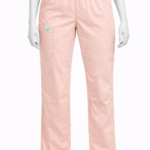
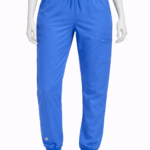
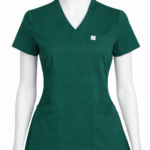
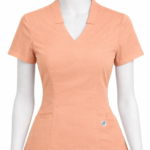
No products added!

Ask any nurse coming off a twelve hour shift how their scrubs held up and you will usually get an honest answer fast. Either the fabric survived the day or it did not. There is not much room for exaggeration when your knees have been on a hospital floor three times and your pockets have been dug through a hundred more. A resident running between wards notices a stiff waistband within the first hour. A lab tech standing at a bench all day feels a scratchy seam by lunch. Clothing that cannot keep pace with that kind of work stops being background noise and starts being a problem.
That is a big part of why healthcare clothing online has become the default way people shop for scrubs now, rather than grabbing whatever a local shop happens to stock. The selection is bigger, the sizing options go further in both directions, and the product pages usually tell you things a store rack never will, like fabric weight or stretch percentage. The tricky part is knowing which of those details actually matter before you check out. That is what this guide is really about: the practical stuff that separates a scrub top still going strong after a year from one that gives up after ten washes.
What to Look for When Buying Healthcare Clothing Online
Skip past colour and cut for a second. The things that actually decide whether a uniform works are fabric, fit, durability, how much it lets you move, where the pockets sit, whether the size is accurate, and how much of a hassle it is to wash. Get one of those wrong and the rest stops mattering much. A gorgeous scrub top in the wrong fabric turns stifling by noon. A pant with plenty of pockets but a bad waistband will have you tugging at it all shift.
Read the material composition on the listing, not just the photo. Cotton polyester blends wear completely differently from a pure cotton weave or a four way stretch fabric, even if they look the same on screen. Check the sizing chart instead of guessing from your usual clothing size, because scrub brands are all over the place with how they cut things. Reinforced stitching, a drawstring or elastic waistband, pocket count: these small line items in a description tend to say more about how a uniform will hold up than any glowing headline claim does.
Durability gets overlooked until it becomes a real headache. Scrubs go through the wash constantly, sometimes daily, and they have to survive hospital grade detergent along with a tumble dryer that does not go easy on fabric. Two garments can look almost identical in a product photo and behave completely differently after fifty washes.
Why Fabric Matters in Medical Scrubs
Fabric is really where comfort gets decided. Breathable scrubs, whether cotton blends or moisture wicking synthetics, help regulate body temperature through a long shift, which matters a lot in a warm ward or under a layer of PPE. Trap heat and moisture in the fabric and the whole shift starts to feel heavier than it should.
Stretch is one of those things nobody thinks about until it is missing. Healthcare work means constant bending, reaching, quick pivots, so a scrub fabric with some elastane in it moves with you instead of fighting you. Stiff, non stretch fabric bunches at the knee or pulls across the shoulder, and by hour ten of a shift that gets old fast.
Softness counts too, particularly for anyone with fabric against bare skin for hours at a stretch. A rough weave can feel fine for the first hour and start to irritate by the fourth. But softness cannot come at the expense of holding together. The scrub fabrics worth buying manage a soft hand feel and a tight enough weave to resist tearing and pilling at the same time. One useful number to check is GSM, or grams per square metre, since it gives a rough idea of how substantial the fabric is. Lighter GSM suits hot climates. Heavier GSM tends to hold its shape and colour for longer.
Finding the Right Fit for Hospital Clothing Scrubs
This is where shopping online gets genuinely tricky, since there is no changing room to check yourself in. Hospital clothing scrubs usually come in classic, relaxed, or slim cuts, and the right pick depends on both body type and the job itself. Someone weaving between patients all day might want a slimmer cut that will not snag on equipment. Someone who sits or bends for long stretches might prefer more room through the hip and thigh.
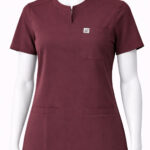
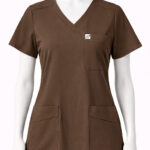
Scrub top length is one of those details people underestimate until it goes wrong. Too short and it rides up every time you reach. Too long and it feels bulky under a lab coat. Sleeves need enough room to move freely without bunching at the elbow, which matters a lot if you are washing your hands every twenty minutes, and in healthcare, most people are.
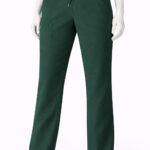
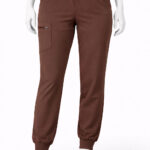
For pants, the waistband deserves real thought. Drawstrings give you adjustability, elastic gives you ease, plenty of brands do both at once. Whatever the style, it should sit comfortably without digging in through a long stretch of sitting or bending. Pant length depends on the hem style too, since some are cut to sit right at the ankle and others run slightly longer for a looser look over shoes.
The honest advice here is to measure yourself and check it against the specific brand’s size chart, not the size you usually wear elsewhere. It saves a return, and it saves the annoyance of scrubs that almost fit.
What Nurses Should Look for in Scrubs Uniforms
Nurses probably have the most demanding days of anyone in a hospital, so the scrubs and uniforms they choose need to survive constant motion, close contact with patients, and long stretches without a chance to change. When choosing scrubs uniforms nurses wear throughout demanding shifts, pockets are usually the first thing an experienced nurse checks on a new pair. A chest pocket for a pen and badge, a side pocket for a phone, something deep enough for shears or a small notepad. It sounds minor until you are three hours into a shift searching for scissors that should be right there.
Durability and range of motion matter just as much. A nurse might be on the floor beside a bed one minute and reaching overhead to adjust an IV line the next, sometimes within the same sixty seconds. Fabric that lets that happen without pulling or gaping cuts down on a surprising amount of daily annoyance. And the uniform still has to look put together after ten hours, since scrubs are often the first thing a patient actually notices about the person treating them.
Colour is not just a style choice either. A lot of workplaces use colour to indicate department or role, so it is worth checking policy before locking in an order.
How to Choose Medical Uniforms Online
Buying without trying anything on means the listing has to do all the work, so it is worth actually reading it instead of skimming the photos. Start with the size chart and measure the parts it asks for, usually chest, waist, hip, rather than assuming your normal size will translate. Good product descriptions mention fabric composition, weight, stretch percentage, and care instructions, and all of that affects how the garment performs six months in, not just on day one.
Screens do not always show colour accurately, so multiple photos or a written colour description help. Reviews, when they exist, tend to surface the details a product page leaves out, like whether something runs small or softens up nicely after the first wash.
Before you buy, check the return and exchange policy. Even careful shoppers get a size wrong sometimes, and a simple return process takes most of the risk out of buying healthcare clothing online sight unseen.
Buy Medical Uniforms That Work for Your Routine
The right uniform really depends on the shape of your actual day. Emergency care tends to call for scrubs built for speed and toughness. A clinic setting with steadier hours might leave more room to prioritise a neater, more tailored look. Shift length changes the calculation too. Twelve hours needs fabric that still feels fine well past hour eight, while a shorter shift gives you more flexibility.
Workplace dress codes are worth checking before you buy medical uniforms, since some facilities require specific colours, closed pockets, or certain styles for infection control. Better to confirm that upfront than to open the box and realise it does not meet policy.
Comfort should not get treated as an afterthought. You are wearing this for close to a third of your working life, which is more than most people give their shoes credit for. A little extra time spent choosing well tends to pay off, since better scrubs simply last longer than the cheap version.
Common Mistakes to Avoid When Buying Scrubs Online
A handful of mistakes show up again and again with first time online scrub buyers. Sizing by regular clothing habits instead of the brand’s actual chart is the big one, since scrub sizing swings wildly from one label to the next. Skipping the fabric composition is another, especially when a photo looks good enough that nobody bothers reading the material list.
Buying purely on looks, without thinking about how something holds up after months of washing and long shifts, tends to end in disappointment. Pockets get overlooked too, which matters more than people expect if your job means carrying tools or a phone all day. And skipping the fine print entirely, care instructions, fabric weight, all of it, is how people end up with something that shrinks or fades faster than it should.
Slowing down for two extra minutes before checkout avoids most of this.
Frequently Asked Questions
What is the most comfortable fabric for scrubs during long shifts?
Cotton polyester blends with a bit of stretch tend to strike the best balance between breathability, softness, and durability over a long day.
How do I know what size to order when buying scrubs online?
Measure your chest, waist, and hips, then check those numbers against that specific brand’s size chart. Do not rely on your usual size from other clothing.
Are stretch scrubs actually better than regular scrubs?
For anyone doing a lot of bending, reaching, or moving fast, yes. A bit of elastane in the fabric makes a noticeable difference by the end of a shift.
How often should scrubs realistically be replaced?
There is no fixed replacement schedule for everyone. It depends on how often the scrubs are worn and washed, the fabric quality, and how much wear they receive. Visible thinning, fading, damaged seams, stretched waistbands, or stains that cannot be removed are good signs that it may be time for a replacement.
What should I actually check before buying medical uniforms online?
Fabric composition, the size chart, care instructions, and the return policy. Those four things cover most of what goes wrong.
Conclusion
None of this really comes down to finding one perfect style. It comes down to fabric suited to the actual job, a fit that lets you move the way your work demands, and small practical features, pockets, stitching, a waistband that behaves, that hold up over time. Healthcare clothing online makes it possible to weigh all of that carefully before you buy, as long as you actually read the size chart and the fabric details instead of scrolling past them. Spend a little extra time getting it right and it pays off on every shift after.